







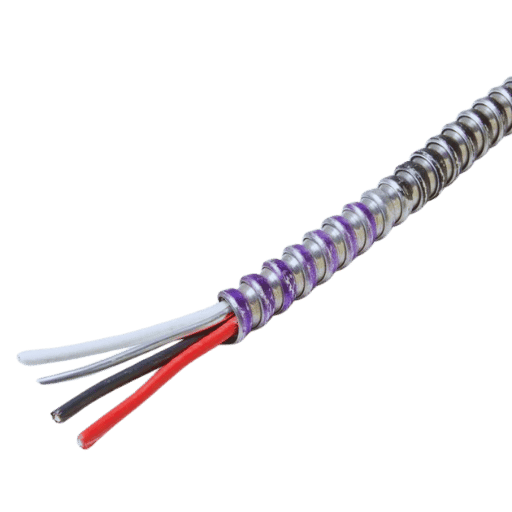
Every wire has its unique specification, and getting them right ensures safety, efficiency, and compliance with building codes or mandates. One of the most popular residential and commercial wiring methods is AC (Armored Cable) and MC (Metal-Clad Cable). While at a surface level, both of these might come across as the same, they differ significantly in construction, applications, and the governing laws. This article intends to explain the differences between AC and MC Cables to ease the understanding of decision making concerning the specific project requirements. For an electrician, contractor, DIYer, and generally anyone looking to learn more about the bolts and nuts of these devices used during electrical installations, this guide attempts to explain these components comprehensively.
What Are the Key Differences Between AC and MC Cable?

Construction:
- AC (Armored Cable) generally includes a paper wrap or bonding strip contained within the armor. MC (Metal-Clad) cable does not include this bonding strip. Instead, it is equipped with a green insulated grounding conductor, which is used for grounding purposes.
Applications:
- Residential areas and light commercial zones are common places for the use of AC cable. In comparison to MC cable, MC cable is more robust, making it suitable for both indoor and outdoor use, including industrial zones with elevated mechanical or environmental factors.
Grounding:
- The armor and the bonding strip of the AC cable provide grounding. Due to having a separate insulated conductor used for grounding purposes, MC cable is more adaptable to different configurations of grounding, ensuring versatility.
Code Requirements:
- AC cable is governed by Article 320 of the National Electrical Code (NEC), while MC cable is under Article 330. The difference in requirements shows different constructions and usages of each cable.
Having these distinctions in mind will enable you to select the most appropriate type of cable for the electrical work of your project in relation to its specifications and the required safety standards.
Understanding the Difference Between AC and MC Cable
To enhance understanding concerning the applications of AC and MC cable, below is a detailed list of key features that set them apart.
Construction:
- AC Cable: Features an internal bonding strip which, together with the armor, forms a low-impedance fault current pathway.
- MC Cable: Contains a non-printed full-sized stranded ground conduit, which is bare or green insulated. This serves as the equipment grounding conductor.
Armor Material:
- AC Cable: Usually consists of interlocking aluminum or steel armor, which provides physical protection as well as grounds the system.
- MC Cable: Is supplied with aluminum as well as steel armor, however the armor is not used as a grounding conductor.
Grounding Conductor:
- AC Cable: Uses the internal bonding strip along with the armor for grounding.
- MC Cable: Has a supplemental grounding conductor to assure the reliability of grounding consistently.
Code Requirements:
- AC Cable: Bound by Article 320 of the NEC, which requires precise regulation on grounding and installation of AC cables.
- MC Cable: Bound by Article 330 of the NEC, with different provisions regarding its construction and grounding system.
Applications:
- AC Cable: Primarily serves residential and light commercial applications, especially where ease of installation is essential.
- MC Cable: Widely used in industrial and commercial settings, particularly where strong grounding or protection against corrosion is needed.
Flexibility in Configurations:
- AC Cable: Mainly intended for conventional building wiring.
- MC Cable: More flexible, including different types of grounding, direct burial, and wet location environments.
Analyzing such differentiations enables professionals to choose the most suitable cable type while ensuring safety, compliance, and the best functionality in their electrical systems.
Exploring the Uses of AC and MC Cable
Both AC (Armored Cable) and MC (Metal Clad Cable), have their specific applications relevant to their design, and thus, are widely used in electrical installation. AC cable finds its application primarily indoors, more specifically in light commercial and residential structures, for general branch circuit wiring. It works well in areas that do not expose the cable to unpleasant conditions, such as moisture.
The adaptability of MC cable to different environments, such as industrial, commercial, and outdoor, makes it more versatile. It finds application in areas that require protection from moisture, direct burial, or shielding in severe surroundings. It is especially preferred in complicated installations where additional grounding, enclosers, and protective pathways are needed due to versatility and strength.
The Role of Grounding in AC vs MC Cable
The significance of grounding in AC (Armored Cable) and MC (Metal-Clad Cable) systems can hardly be overstated in the context of electrical safety and the reliability of the system as a whole. AC cable incorporates an integral bonding strip that is tightly wrapped with the armor, resulting in a direct path for grounding. This allows the cable armor to act as a grounding conductor.
Grounding in the MC cable is not provided by the armor. Rather, it includes an insulated or bare ground wire in the cable assembly. Even in areas subject to physical and corrosive damage, this conductor provides an unobstructed, reliable grounding path. A key difference is that the addition of a separate grounding conductor in MC cable strengthens its performance for harsh applications where strong electrical grounding is critical.
Why Choose AC Cable for Electrical Installations?
Advantages of Armored Cable in Residential Wiring
- Enhanced Durability: Armored cable offers long-term dependability in residential applications because it is manufactured with a strong metallic sheath that protects against physical damage.
- Fire Resistance: The metal armor further contributes to fire safety in electrical installations as an added barrier to heat and flames.
- Ease of Installation: Streamlining installation processes by reducing labor time, armored cable does not require conduits in many cases.
- Electromagnetic Interference (EMI) Protection: Providing reliable electrical performance, the metallic armor protects the internal conductors from electromagnetic interference, ensuring stable signals free from disruption.
- Superior Grounding: Reducing the need for a separate grounding wire, the sheath of armored cable can, in several installations, serve as an effective equipment grounding conductor.
- Cost-Effective Solution: Armored cable’s combination of durability, paired with individually fire-resistant and grounding capabilities, makes it more cost-effective than other simpler wiring systems.
- Code Compliance: Armored cable fulfills applicable electrical controls for safety and performance, making it compliant with residential standards, trusted wiring, and residential standards.
- Versatility: Armored cable demonstrates adaptability as it can be used in concealed walls, exposed locations, or moist environments, suitable for various installation settings.
- Minimal Maintenance: The increased durability of the metal armor lessens the frequency of required maintenance or repair on something, increasing its overall value over time.
Understanding the Bonding Strip in AC Cable
The bonding strip in AC cables acts as a grounding conductor to the cable, providing electrical protection as a low-impedance path to ground per the electrical safety requirements.
When to Use AC Cable in Wet Locations
- Outdoor Use: AC cable can be used in outdoor locations that are exposed to rain or any form of moisture.
- Subterranean Use: AC cable is applicable in underground locations as long as it is placed in wet-rated conduit systems.
- Damp Industrial Conditions: The cable can be employed in industrial facilities that are damp and where water or humidity is consistently present.
- Laundries and Other Similar Places: AC cables can be used in residential or commercial spaces in areas like laundries, which are moisture-prone.
- Crawlspace or Basement: In more aged construction, AC wires can be used in the protected form, in basements or crawlspaces that are humid.
- Marine or Coastal: AC cable is practical in humid places and places continually sprayed with saltwater. Also, places near water bodies, like docks, marinas, and coastal buildings.
- Agricultural Regions: Greenhouses, barns, and similar agricultural structures that are exposed to condensation or irrigation can greatly benefit from the use of AC cables.
The incorporation and effective employment of AC cable in wet locations severely depend on proper installation practices and local electric regulations.
What Makes MC Cable a Preferred Choice for Electricians?

Features of Type MC Cables
- Robust Construction: Type MC cables are encased in a durable metallic armor that provides superior protection against physical damage.
- Versatility: Their applications span across industrial, commercial, and residential sectors.
- Compact Design: The interlocking armor structure of MC cables results in a space-saving, lightweight design without sacrificing performance.
- Fire-Resistant Ratings: Numerous MC Type cables are supplied with fire-rated features to fulfill multiple fire and safety requirements.
- Ease of Installation: The flexibility of these cables simplifies routing through conduits and around corners, saving time and minimizing difficulty during installation.
- Compatibility with Grounding: The armor of specific MC cables simplifies equipment grounding as it can serve as an Equipment Grounding Conductor (EGC).
- Moisture Resistance: Type MC cables with optional outer jackets and sealed constructions can come in contact with damp and wet conditions.
- High Conductivity: These cables utilize copper or aluminum conductors to ensure efficient electrical conductivity for diverse power distribution needs.
- Temperature Range: Type MC cables can be used in extreme environmental conditions as they are designed to perform within a wide range of temperatures.
- Code Compliance: Type MC cables are gapless constructs to NEC (National Electrical Code) regulations for multiple applications. MC Type cables are guaranteed to exceed set standards.
Applications: When Is MC Cable Preferred?
- Industrial Facilities: Strong construction, which can withstand mechanical harm and harsh conditions, makes MC cables common in industrial workplaces.
- Commercial Buildings: Their versatility and compliance with safety regulations also make them appropriate for use in office buildings, shopping centers, and even hospitals.
- Residential Projects: In multi-family housing units or apartment buildings where there is a heightened need for fire safety, MC cables are also suitable.
- Underground Installations: Some types of MC cables are rated for direct burial, therefore they are commonly used for underground power distribution.
- Exposed Applications: For exposed runs such as in basements and utility rooms, MC cables are ideal as interlocked armor offers added protection.
- Hazardous Locations: MC cables are appropriate for certain installations in hazardous locations and meet criteria for areas with flammable gases, vapors, and dust.
- Data Centers: Relaying power to critical systems and equipment ensures that MC cables are frequently relied on in data centers.
- Control and Signal Transmission: MC cables are also used in control circuits and in building automation systems for lighting and signaling.
- Outdoor Applications: Certain MC cables can be installed outdoors and are resistant to sunlight and moisture when fitted with the correct jacket materials.
- Temporary Power Installations: Their use is widespread for the provision of temporary power in construction sites or during events, owing to the ease of their installation and dismantling.
How MC Cable Consists of Different Components
MC cables are made of insulated conductors together with a grounding/bonding conductor, all encased in an aluminum or steel interlocked armor, sometimes protected additionally with a moisture-resistant jacket for added durability and to meet applicable standards.
How Do AC and MC Cables Ensure Protection and Grounding?
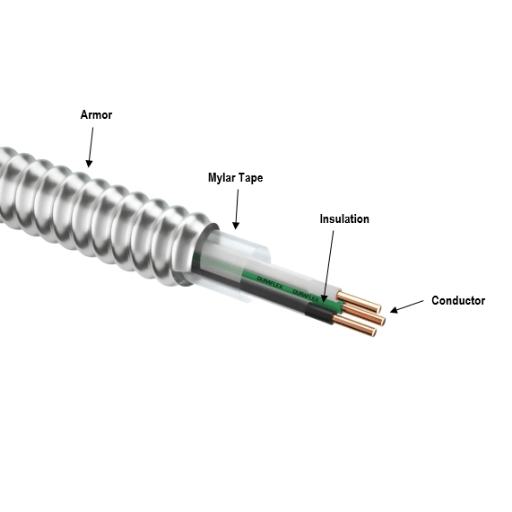
The Importance of Metal Armor in Electrical Safety
The protective metal sheathes within electrical cables safeguard against physical breaches and electromagnetic interference, whilst also acting as an effective grounding point—all in alignment with contemporary electrical safety regulations.
Role of Ground Conductor in AC and MC Cables
- Enhanced Safety: Safety is enhanced as the ground conductor allows electrical faults to dissipate efficiently into the ground, which greatly reduces the risks of electrical shocks or fires.
- Fault Current Handling: The ground circuit also deals with fault currents, thus enabling the circuit breakers or fuses to open the Faulty circuit during one of the abnormal conditions.
- Electromagnetic Interference (EMI) Reduction: The ground conductor also aids EMI by grounding the cable, reducing interference so that sensitive electrical equipment can operate accurately and dependably.
- Compliance with Standards: Proper grounding and meeting electrical codes and requirements of proper regulations ensure the installation does not fall below accepted safety limits.
- Minimized Voltage Build-Up: The ground conductor ensures that motionless, incredibly dangerous voltage does not build up in the cable armor or equipment, which protects systems and personnel.
Understanding the Level of Grounding Provided by Each
The protective functionality of each system is contingent upon its structure and execution. Effective grounding ensures an earth return path with minimal resistance, guaranteeing safety and operational efficacy. Systems having separate grounding conductors usually offer better protection than those relying on conduit or cable armor for grounding. Achievable reliability in a grounding system is attained through thorough examination of grounding parts, compliance with safety regulations, and routine system upkeep.
How to Determine the Right Type of Cable for Specific Needs?

Assessing the Electrical Code Requirements
When trying to verify the appropriate class of a specific cable, these applications would include different market sections such as residential, industrial, or even commercial. This could be derived after checking with the ISO marks and local electrical codes, especially the NEC. The voltage level, current capabilities of the cable and environmental conditions of the location (wet and dry) where the cable is going to be installed should be analyzed, Voltage grade is also a critical factor to consider when choosing the cable. The offered cable should surely pass the tests of proper insulation defined by the codes, Also their relevant approval stamps have to be checked. Insulation tests, stamp tests, and overall mark compliance must be checked against the safety provided for the load, environment, and operational needs to always guarantee sufficiency alongside dependability.
Considering Physical Damage Protection
Conduit systems, cable trays, or other protective enclosures appropriate for the installation environment should be used to shield cables from physical damage. Materials that offer protection from possible impact, abrasion, or exposure to corrosive substances should be selected. The protective system must conform to relevant codes and standards such as the National Electrical Code (NEC). Periodic inspections, along with maintenance, help to identify and mitigate potential threats to cable health. This multi-layered approach preserves the longevity and operational integrity of the cables.
Choosing Between Two Types of Electrical Cables
As for the insulation, conductor type, and particular demands of the usage, these three factors, among others, guide my choice for one of the two possible types of electrical cables. For assistance, I often turn to JOCA Cable, which provides thorough guidance on cable types and proper usage. This way, I am sure that the decisions I reach are based on factors such as quality, durability, and compliance with regulations and standards.
Frequently Asked Questions (FAQs)
Q: What distinguishes MC and AC cable used in metal-clad electrical wiring?
A: The design of MC (Metal Clad) and AC (Armored Cable) cables is what differentiates them from being used in metal-clad electrical wiring. MC cables contain an insulated full-size grounding wire and are generally appropriate for wet locations, while AC cables contain a bonding wire that is wrapped inside the armor and are usually found in dry locations. MC cables are relatively more flexible as well as better protected from physical damage due to their flexible metal jacket.
Q: What are the features of metal-clad cables, and where are they used?
A: Metal-clad cables, as the name suggests, are a type of electrical wiring that has a metal covering around insulated conductors, which enhances the physical protection against any form of damage, alongside improving safety and reliability. Their use is important in different installations of electricity where strength, protection, and coverage from external factors are essential.
Q: What is the effect of cable armor continuity on metal-clad cable performance?
A: Continuity of armor enhances the operational performance of metal-clad cables by grounding systems. A complete metal jacket is advantageous for installation because it increases the safety and reliability of the electrical system by providing an efficient electrical pathway for fault currents and reducing hindrances.
Q: What is the function of the bonding wire in AC cables?
A: The wrapping of bonding wire in a kraft paper and its placement in AC cables serve the function of a guard wire to ensure the cable armor is grounded by effectively grounding the cable for reliable installation.
Q: Describe the application of a dedicated ground wire in MC cables.
A: Protective casing employs a separately insulated ground wire for MC cables, which creates a distinct grounding path separate from the rest of the wire, which increases the safety profile of the electrical network.
Q: What is the importance of thin metal armor in metal-clad cables?
A: Movement through many diversions in the wiring system is made simpler by the use of thin metal armor in metal-clad cables, which provides a high degree of protection from physical damage while maintaining flexibility and greatly reducing hindrances.
Q: What benefits do individually insulated conductors provide in MC and AC cables?
A: Individually insulated conductors improve the safety and effectiveness of MC and AC cables in electrical installations by providing better protection against short circuits and electrical interference.
Q: Comparing MC electrical cables to other types of cable, how is protection provided?
A: The protective features of MC electrical cables are among the most advanced due to the presence of a flexible metal jacket with a dedicated grounding wire. They are best used in settings where physical damage protection is enhanced over what standards cables offer.
Q: Why is a standard ground wire important when installing metal clad cables?
A: Use of a standard ground wire in clad metal cable installations offers a means of grounding the electric system, which is compliant with safety standards and electrical regulations.
Q: Can metal-clad cables be used in wet environments?
A: Yes, metal-clad cables, specifically MC cables, are suitable for use in wet environments because they have a full-size insulated ground wire and their sheathing is moisture resistant.
Reference Sources
- Building Maintenance & Wiring – An instructional video describing the properties of AC and MC cables in depth.
- LCLS Cable Specifications – A document prepared by the SLAC National Accelerator Laboratory detailing the specifications of cables, including MC cables.
- Northwestern University Design Guidelines – Regulations on the application of MC and AC cables in low-voltage electrical circuits.
- 24 CFR § 3280.808 – Wiring Methods and Materials – A legal text elaborating the application and relevance of AC and MC cables in certain contexts.
- Low Voltage Electrical Power Conductors and Cables – A textbook by IMSA explaining the regulatory requirements regarding AC and MC cables compliance standards.
- Electrical cable
- Wire
- Electrical wiring