






Understanding Industrial Wire and Cable
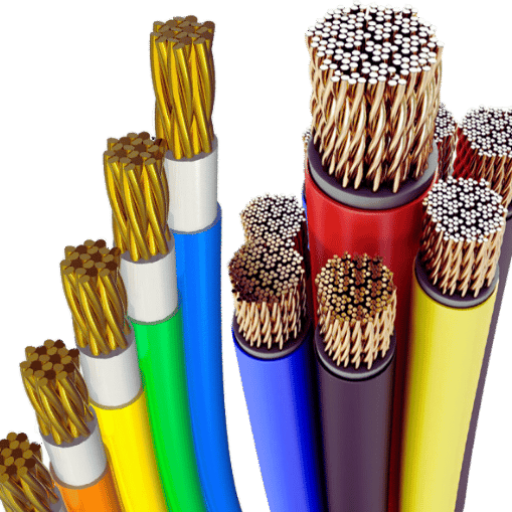
The industrial wires and cables are essential parts of modern infrastructure, responsible for the transmission of power, data, and signals for various industries. The cables are designed to work in challenging environments, providing strengths, efficacy, and reliability. In general, depending on their use, they are power cables, control cables, and data cables; power cables transfer electricity; control cables carry signals to be used to operate equipment; data cables are for communications. The choice of the industrial cable depends upon the application considered, which includes voltage, environmental considerations, regulatory standards, etc.
Definition of Industrial Wire and Cable
Industrial wire and cable is a very generic term used to describe conductors for energy transmissions, signaling, or data operating within industrial environments. These cables are engineered to function in optimum conditions when harsh environmental effects like elevated temperature, chemicals, mechanical stress, or the presence of moisture come to play. Copper and aluminum are frequently used as conductors because they provide superior electrical and thermal conductivity, while insulation or sheathing may be made of thermoplastic or thermoset materials to provide extra protection and durability.
Gbps Data Transfer Rate
Maximum Voltage Capacity
Market Growth CAGR
According to industry experts, the global industrial cable market has witnessed tremendous growth, with the enhancement of industrial automation, the development of infrastructure, and energy from renewable sources. For instance, data cables, such as fiber optics, are now fundamental to high-speed and reliable communication. Some can transmit data at a rate of more than 100 Gbps. Power cables from the heavy industries, on the other hand, are being designed for energy transmission at voltages as high as 765 kV over long distances with minimum energy loss.
The modern industrial cables have to conform to strict international standards such as ISO, IEC, or UL, to compete on safety, quality, and efficiency. Accordingly to advancing technologies, manufacturers are modernizing their flexible cable features, such as flame resistance, a higher degree of flexibility, and better environmental sustainability, which hence makes these cables unavoidably necessary across diverse sectors.
Importance of Industrial Electric Wire and Cable
A vital means of powering and infrastructuring modern-day industry is the industrial wire and cable. These industrial wires and cables are essentially the energy backbone, facilitating the smooth running of machinery, systems, and networks across manufacturing, construction, telecommunication, and transport sectors. If reliable wiring and cabling were not present, operations would constantly face disruptions, inefficient energy usage, or outright safety hazards.
The global industrial cable market is expected to grow steadily with a CAGR of around 5.7% from 2021 to 2028. The market growth is majorly attributed to the increasing demand for renewable energy sources, for which special types of cables are required for wind farms, solar installations, and smart grid expansions. For example, offshore wind farms require high-tech, high-voltage cables that can sustain a harsh marine environment and deliver energy transmission consistently over long distances.
Safety is one of the main issues modern industrial cables address. Features such as fire-retardant insulation, materials giving off low smoke, and halogen-free components find use more and more primarily to meet exacting safety regulations and reduce hazards in a combustible environment. Moreover, smart cables embedded with sensors are being developed to help in real-time monitoring of temperature, load, and performance so as to promote predictive maintenance and avoid downtime.
Other very important factors for industrial cables are flexibility and durability. Flexible types of cable are extremely useful in robotics and automated manufacturing systems since continuous motion everywhere requires high-performance wiring that withstands repeated stress. Also, the use of recyclable and environmentally friendly materials in cable manufacture promotes the concept of sustainability, which is a goal of policies worldwide.
Industrial electric wire and cable, therefore, were regarded as more than mere electrical connectors; they are an indispensable part of efficient energy distribution, technological growth, and workplace safety across various industries.
Applications in Various Industries
Companies manufacturing electric wire and cables generate power and connect industries for various specialized requirements and challenges.
Manufacturing
The manufacturing process requires very durable and efficient wiring to work on different machinery, automated systems, and robotics. Fine heat-resistant cables are laid in a factory, where heat is present, for the maintenance of the production. It is predicted by industry reports that the demand for more advanced wiring in the manufacturing sector might grow drastically with automation trends and the increasing use of Industry 4.0 technologies.
Construction
Cables in the construction industry are used for infrastructure development, including electrical wiring for buildings, bridges, and large residential and commercial projects. Low-voltage wiring is essential for lighting, networking systems, and security, while high-voltage cables are used for main power distribution. There is a steady increase in the trajectory of the construction cable market, especially with the proliferation of smart cities and green building ventures.
Energy and Utilities
For power generation, transmission, and distribution, cables are needed in the energy and utilities sector. Wind farms and solar power plants are renewable energy projects that require particular cables that can bear outdoor conditions and variable power loads under pressure. Because of the rise in preference for sustainable energy sources, the demand for these cables is expected to grow at a CAGR of over 7% for the next ten years.
Telecommunications
Telecommunication greatly benefits from the reliable cabling system, mainly with the worldwide push for 5G infrastructure rollout. Fiber optic cables, providing high-speed data transfer, remain critical for supporting modern telecommunication networks. Rampant internet usage and broadband services expansion will lead to fiber optic cables dominating the telecommunication sector by 2028.
Transportation
Transportation systems such as roadways, aviation, and railroads require specialized wiring to maintain operations, safety systems, and advanced communications. For instance, electric vehicles offer highly lightweight cables to offset energy efficiency. We are seeing fast-paced advancements in wiring for such purposes as the need for EV cables grows over 20% per year.
Industrial electric wires and cables are essential components of innovation across industries, with their capacity to transform along with emerging needs while supporting global sustainable development and technological aspirations. They guarantee safety, efficiency, and reliability, thus holding a very esteemed position in any modern industrial setup.
Types of Industrial Cables
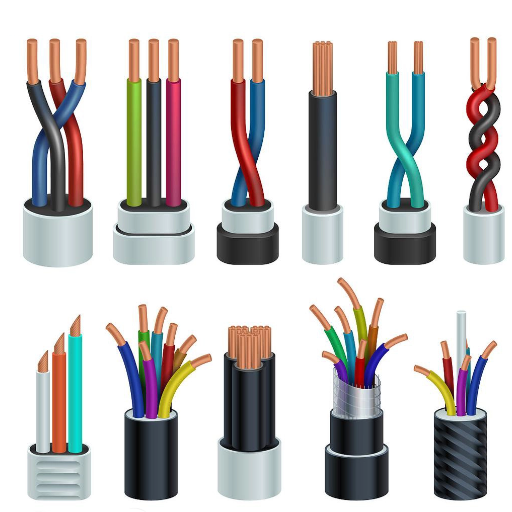
Power Cables
Carry electricity in industrial systems, guaranteeing a constant and reliable energy supply.
Control Cables
For automation purposes, these cables interconnect and control equipment or machinery.
Data Cables
Essentially, in communication systems, they communicate both digital and analog signals.
Instrumentation Cables
For monitoring and controlling processes in various industries, including oil and gas or manufacturing.
Coaxial Cable
This is generally used for high-frequency transmissions, for instance, in telecommunication systems.
Fiber Optic Cable
They serve as providers of high-speed data; hence, they are widely used in advanced communication networks.
Each type serves a specific purpose, which makes a contribution toward the effectiveness and efficiency of any industrial operation.
Common Cable Types in Industrial Settings
Industrial setups require a wide range of cables for efficiency and reliability. Depending on its characteristics, each cable is used to meet the demands of unique industrial systems. Let us delve into the specifics of these important cable categories and their uses:
Instrumentation Cables
Instrumentation Cables are involved in the control and process setup, transmission of low-energy electrical signals. These cables are generally shielded against any external electromagnetic sources to keep the signal in. These cables are extensively used in the oil and gas, manufacturing, and power plant sectors. Recent advances in instrumentation cables have improved their durability, making them suitable for use where exposure to harsh environments—including high temperatures, chemicals, and mechanical stresses—is expected.
Coaxial Cables
Coaxial cables, essentially known for high-frequency signal transmission, have always provided simple telecommunication systems for communication. Their design consists of an insulating layer plus a metallic shield, giving them great protection against interference to the signal. These cables are generally utilized for broadband services, security camera setups, and industrial-grade data transmission, where some can transmit high-bandwidth data over a distance spanning a few kilometers.
Fiber Optic Cables
Fiber optic cables are the highly competent data-communication backbone of the modern communication system, having high speed and absolute reliability. Unlike standard copper wire, the fiber optic cable uses light for communications, reducing signal degradation with increased distance. Industry reports suggest that fiber optic cables offer bandwidth capacities as high as terabits per second. These rates make fiber optics best suited for data centers, telecommunications, and industrial environments requiring real-time monitoring and control.
Power Cables
Power cables are designed to deliver electricity in high amounts, generally for heavy machinery or for large-scale production centers. Depending on a factory’s needs, these cables carry voltages from less to extremely high. Advanced insulation materials are being adopted by manufacturers so that they increase safety and eliminate the loss of energy, making operations more energy-efficient.
Specialty Cables
Specialty cables are designed for unique industrial conditions applied in areas classified for extreme temperatures, corrosive chemicals, or underwater scenarios. Examples include thermocouple cables in temperature measurement systems and subsea cables used in offshore platforms. Usually, these cables are subjected to tests meeting certain standards for industries so that they can go through crucial tasks without failure.
The performance of a cable is dependent on several other factors unique to that cable type. On making an informed decision, industries can optimize performance, reduce downtime, and ultimately create productive operations.
Specialized Industrial Cable Types
1. Thermocouple Cables
In the case of temperature measurement, thermocouple cables form an essential component. In other words, for thermocouple cables, the millivoltage signals generated by particular temperature sensors must be carried free of any interference or erroneous signals caused by electromagnetic interference. These cables tend to be constructed from materials nearly identical in composition to the thermocouple alloys so as to be able to function in adverse environmental conditions that accompany their use. Modern thermocouple cables resist temperature ranges that exceed from about -300°F to around 2000°F (-184°C to 1093°C), depending on the material of construction. Aerospace, energy, and manufacturing industries are typical for thermocouple cable applications to monitor and control processes that demand precision.
2. Subsea Cables
Subsea or underwater cables are considered instrumental in transporting power and data below the ocean, sea, and lake floors. These cables are vital, indeed, in telecommunications, offshore energy, and marine exploration. One of the recent changes is that these fiber-optic subsea cables can transmit terabits of data per second from one continent to another. Subsea cables consist of various layers of protection, including sheathing, armor, water barriers, and insulation materials, which protect the cables when they are exposed to underwater scenarios such as pressure, corrosion, and marine interference. For example, high-voltage subsea power cables can operate effectively at depths of up to 10,000 feet (approx. 3,000 meters) and still be reliable over such long distances.
3. Robotics Cables
Robotics cables, unlike other types of cables, can be subjected to continuous motion, high speeds of flexing, and torsion stresses without experiencing failure. These cables are popular in the automation and manufacturing industries and are built with special care to take the battering of dozens of millions of flexing cycles. With a materials construction approach against abrasion, oil, and chemicals, the top-of-the-line cable utilizes shielding to overcome electromagnetic noise interference. Therefore, these cables are highly customizable, allowing manufacturers to configure solutions to various applications such as welding, pick and place, and assembly line processes.
4. High-Temperature Cables
While being made to operate in extreme heat without degradation or loss of performance, these cables find use in industries like steel production, glass manufacturing, and power plants, where equipment may often encounter temperatures exceeding 392°F (200°C). Common insulating materials used are silicone, mica, or PTFE (polytetrafluoroethylene) to keep in properties like flexibility and resistance to heat-induced aging. It has been shown that enhancements in high-temperature cable technology could bolster their durability by about 30 percent in heavy-duty situations.
Industries utilize this unique potential given by specialized industrial cables for operational efficiency, allowing them to confidently address challenges in their sectors.
Differences Between Wire and Cable
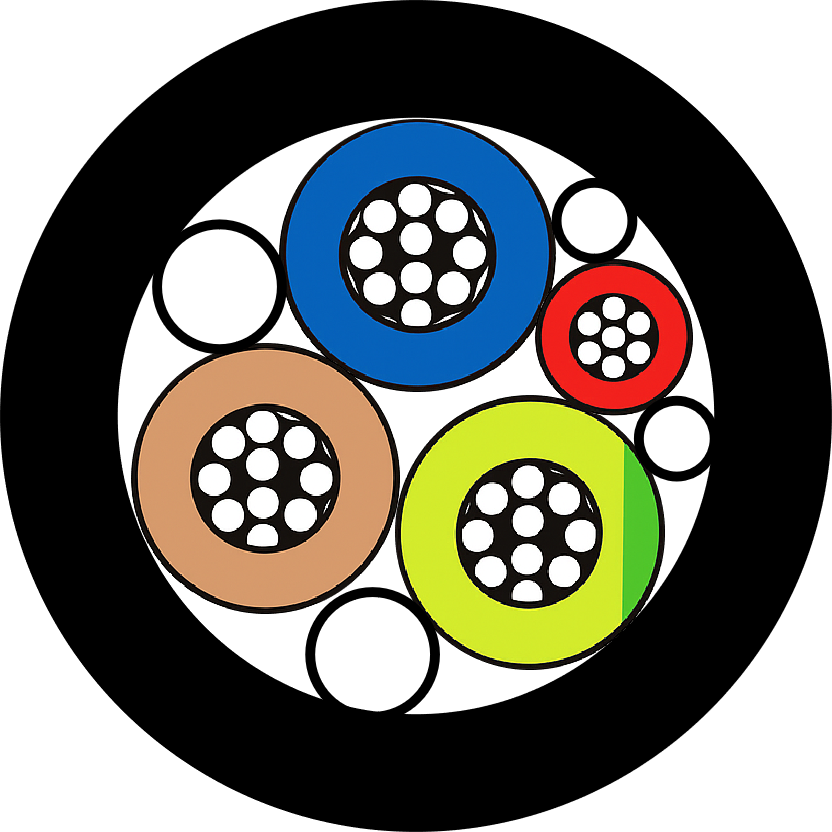
The terms “wire” and “cable” are often interchanged, but there are specific differences in their structure, usage, and capacity. The wire consists of a single strand or a bunch of strands of conductive material-working mainly to conduct electrical current through copper or aluminum. A cable, meanwhile, consists of two or more wires bound together and usually insulated for functionality and protection.
| Aspect | Wire | Cable |
|---|---|---|
| Structure | Single strand or multiple strands of conductive material | Two or more wires bound together with insulation |
| Types | Solid wire (rigid) and stranded wire (flexible) | Power cables, data cables, control cables |
| Applications | Internal circuits, electrical appliances, lighting | Industrial systems, telecommunications, power grids |
| Protection | Basic insulation | Advanced insulation, shielding, durability features |
| Performance | Simple electrical conduction | Complex electrical tasks, better efficiency |
From a structural point of view, wires are simpler and are divided into two types: solid and stranded. Solid wire has only one strand; it is rigid and must be used when the application requires the wire not to be bent, as in household electrical fixtures. Stranded wire consists of two or more thinner strands twisted together, providing much flexibility in situations where constant movement or frequent bending occurs. On the contrary, cables achieve a much more complex electrical task. A cable may comprise one or more wires carrying power, one or more wires carrying signals, or indeed a mixture of each, thus making it integral to telecommunication, power distribution, and industrial machinery.
By nature, a cable will always perform better than a wire in terms of insulation, shielding, and durability due to its layered mode of protection. For example, a heavy-duty cable can withstand very harsh conditions, such as extreme heat or moist environments, and it can also withstand some level of physical stress, which are requirements for industrial and outdoor usage. Recent technological advances have made modern cables more efficient and longer lived, with data suggesting energy losses into heat are reduced by 25% in some new, high-capacity cables compared to older ones.
Usage scenarios also highlight the differences between wires and cables. Wires are generally deployed in simple applications such as internal circuits, electrical appliances, and lighting equipment. Cables, on the other hand, are built to carry out heavy-duty work of connecting large-scale industrial systems or carrying data for the internet or telecommunication, or powering electrical grids.
In the end, understanding what distinguishes a wire from a cable is essential when it comes to choosing between two components for a particular application. Factors such as conduction requirements, environmental considerations, and mechanical constraints are considered in making the decisions. Thus, in making the decision, the industry is well-placed to make a choice that will effectively provide for the application at hand while considering time and cost.
Wire and Cable Solutions for Industrial Applications
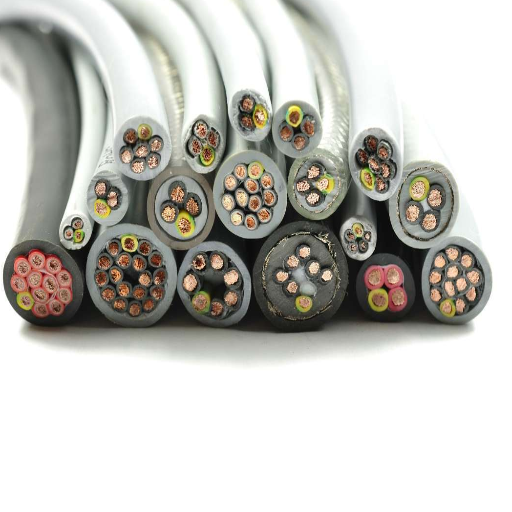
Industrial applications call for long-lasting and reliable wires and cables to ensure their utmost serviceability and safety. To put it briefly, some key types are:
Power Cables
These cables are applied for the transmission of power and are used in the industrial sector for powering machinery, equipment, or the grid.
Control Cables
Used to transmit signals to monitor and control industrial processes, operations are carried out with precision.
Instrumentation Cables
Equipment for transmitting low-level signals, minimizing interference.
Data Cables
For uninterrupted high-speed signal transmission in telecom and IT systems.
Choosing one from the variety available depends on voltage requirements, environmental factors, and mechanical strength. In many cases, even reputed manufacturers offer customization to suit particular industrial needs.
Custom Industrial Wire and Cable Solutions
Custom industrial wires and cables solutions are designed to meet diverse and complex industry requirements, along with enhanced performance, safety, and reliability. These solutions are most critical for industries like aerospace, renewable energy, automotive, or heavy manufacturing, where the area of application often exceeds standard products.
Modern materials and technologies tailor custom cables for the exact application. For example, the application of heat-resistant wires becomes evident for environments such as industrial ovens or turbines, where extreme heat is the deciding factor. Industry data trends show that flame-retardant and halogen-free cables have been witnessing growing demand, as the safety regulations and concerns for the environment are becoming more stringent. Halogen-free cables release very less toxic gases during combustion, rendering them fit for use in areas where a large density of human population could be present or in an enclosed space.
One must consider conductor material, insulation type, shielding, and jacket material for a custom cable design. Copper is usually the most popular conductor because of its excellent electrical conductivity, while other materials, such as aluminum and tinned copper, are finding their way into lighter designs. Insulation types include PVC, PE, or Teflonand they vary depending on the environment, voltage, exposure to chemicals, or moisture.
The global industrial wire and cable market is expected to grow at an approximate compound annual growth rate (CAGR) of 5% in the upcoming years to satisfy the growing demand for high-performance and energy-efficient solutions. The regimen of technological advancement in IoT and automation will thereby underscore the importance of strong and reliable cabling systems in an industrial paradigm.
This also considers waterproofing, UV resistance, among many other features, added to the durability and functionality of customized cables. This flexibility gives industries the chance to address particular challenges, improve uptime, and adhere to technical and safety standards.
End-users are advised to work closely with the manufacturer in determining the specifications and choosing designs that will address their needs in ensuring cable solutions fit their operational requirements, which is beneficial for greater implementation efficacy and cost-effectiveness in the long run.
Choosing the Right Electrical Wire and Cable
Now you understand, selecting a wire or cable influences safety, efficiency, and performance; Ultimately, here are some fantastic points to consider:
Voltage Rating and Current Capacity
The wire or cable with such characteristics should withstand under maximum voltage and load. Therefore, it should not be overloaded or overheated up resulting in fire.
Material Type
Copper and aluminum are the most common conductor materials. Copper has better conductivity and durability, whereas aluminum is light and cheap.
Insulation and Sheathing
Choose the type of insulation that suits environmental assumptions, such as temperature, moisture, and chemical exposure. Some commonly used options include PVC insulation, XLPE insulation, and rubber insulation.
Application and Code Compliance
Wires or cables suitable for the application are known, such as indoor and outdoor, underground, or industrial use. At the same time, ensure compliance with local electrical codes and standards (such as NEC in the USA).
Environmental Factors
Take into account environmental conditions that may be present when in use; temperature, UV exposure, chemical resistance, or the presence of water, all of which may demand insulation and coatings of certain types.
Cable Size
The gauge or thickness of the wire or cable must be such that it can carry the required amperage for the given distance with minimal voltage drop and therefore power loss.
By evaluating these factors, you stand almost assured to end up with a wire and cable that is safe, reliable, and fit for your technical needs. If there is ever any doubt, don’t hesitate to speak with certified professionals or manufacturers.
Factors to Consider in Industrial Cable Solutions
Material Considerations
Copper is being favored for higher conductivity and durability, while aluminum is a cheaper option for lower weight. Ultimately, material choice depends upon your project’s performance requirements and budget.
Temperature and Environmental Resistance
Look for cables that can tolerate your application’s temperature extremes, chemicals, or water exposure. Operating in harsh environments, insulated and coated materials, i.e., PVC or XLPE, are recommended to guard against such.
Voltage, Amperage, and Application
Check voltage and amperage ratings as industrial cables need to sustain heavy-duty machinery, power distribution, or automation systems. Always refer to the applicable safety standards to verify sizing and suitability.
By balancing these factors and considering industry standards, you will be able to ensure maximum cable performance and lower any industrial risks. Always check out the technical specifications and seek expert recommendations specific to your case.
Manufacturers and Suppliers of Industrial Cables
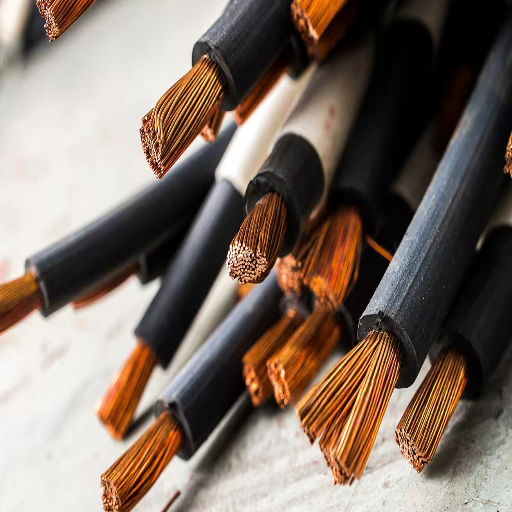
The industrial cable business has several major players, each having its own assortment for different industrial activities:
Prysmian Group
High-quality industrial cables are made so that power, control, and data cables are subjected to more rigorously defined environments.
Nexans
Innovative cable solutions that serve industrial needs with durability and efficiency considerations.
Belden
Provides robust industrial cables for automation in order to guarantee reliable performance even in harsh conditions.
Southwire
Supplies industrial cables for both standard and special application needs.
General Cable
Provides reliable cable products with an established image.
The above manufacturers are known to observe safety, performance, and industry standards. Always check whether the item conforms to the approximation, and inquire from the supplier for any further particular needs.
Top Manufacturers of Industrial Wire and Cable
The top manufacturers of industrial wire and cable should be considered when addressing reliability, innovation, and industrial standards. From these sources, the key players included have been selected:
Prysmian Group
Prysmian Group stands as a worldwide leader in the design of cable systems for energy and telecom. It offers all sorts of products, including industrial cables for harsh environments, to ensure maximum durability and performance.
Southwire
Southwire carries a broad range of industrial cables for many applications. Known for its versatile applications and high quality, Southwire remains a reference for quality.
General Cable
The celebrated name of wire and cable means it focuses on developing the most innovative and high-performance cable solutions, where General Cable concentrates on safety, reliability, and sustainability.
The manufacturers say it all: advanced engineering, superior materials, and care for the many industrial needs. In cases of specific requirements, users are advised to contact the companies so as to establish the usage in an appropriate way.
Evaluating Wire and Cable Products
When selecting wires and cables, a few essential considerations need to be made to ensure the most suitable choice for your application:
- Application Requirements: This involves application parameters and the surrounding environment where the wire or cable will be used. Such factors include operating temperatures, voltage, and whether it will be subjected to conditions like moisture, chemicals, or physical damage.
- Material Composition: This includes the type of conductors used and the materials used for insulation. Copper is mostly chosen for its conductivity and durability, whereas insulated materials are selected based on their resistance to heat, abrasion, and external nuisances.
- Certifications and Standards: Put a premium on standards of compliance like UL, CSA, or ISO from industry regulators to assure quality, safety, and dependable performance.
- Durability and Performance: Is the product structurally strong, flexible, and durable? If it is for a dynamic application, a more flex-resistant cable is required.
- Cost-Efficiency: This is basically the quality versus price dilemma. Coax/Hi-performance cables sometimes cost a little more than those of lesser quality, but the operational cost is less due to their reliability and efficiency.
Analyzing all these factors and working on the product specifications or contacting technical support from top manufacturers would allow users to make an informed decision concerning their wire and cable requirements.
Trends in Industrial Cable Manufacturing
Future of Industrial Cable Technology
The industrial cable manufacturing sector is evolving rapidly with the advancement of technology and increased demands for efficient and sustainable solutions. Some of the key trends include:
Smart and Connected Cables
The growth of the IoT has promoted a high demand for cables embedded with sensors and monitoring capabilities. Such cables communicate real-time data on their functioning to enable better predictive maintenance and prevent downtime.
Sustainability Initiatives
There is a consideration in the production process to be environmentally friendly and in the use of materials. This implies the use of recycled or biodegradable materials and methods of production that consume less energy to be in line with global sustainability goals.
Miniaturization and High Performance
The demand for compact, high-performance cables is rising in robotics, aerospace, and consumer electronics. New materials and designs allow cables to be powered with great loads while being kept flexible and durable in smaller forms.
Customization for Industry-Specific Applications
Very specific cable solutions are required from different industries, from robotics to renewable energy. The manufacturers have begun providing customized products to meet the exact requirements of the respective applications to increase operational efficiency.
The Sturdy and Reliable One
Cable nowadays is required to stand in a modern industrial setup against harsh conditions such as extremely high temperatures, mechanical stress, and chemical attacks. Advancements in the materials of insulation and sheathing have aided in increasing cable life and performance.
Attention to such currents allows a business to prepare its wire and cable solutions for tomorrow’s technologies.
Connectors and Harnesses in Industrial Applications
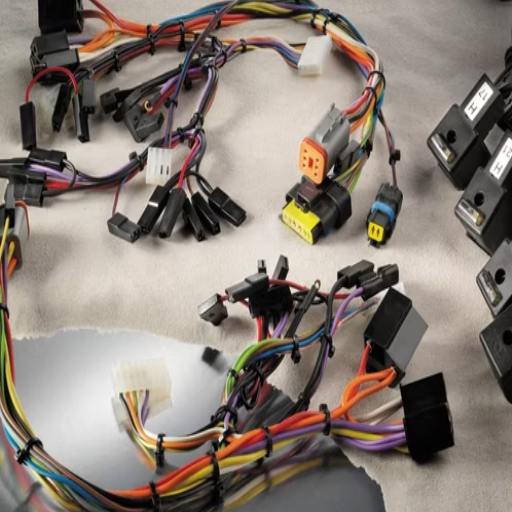
Connecting devices and harnesses play an essential function in industrial applications to ensure the steady transmission of power, data, or signals among components. Their other roles are to keep a secure connection so that system failures can be minimized and to untangle complicated wiring systems for ease of organization and efficiency. In any harsh industrial environment, the use of good-quality connectors combined with a well-designed harness can provide durability, resistance to environmental stress, and ease of maintenance. When these are optimized for the business environment, it is but logical that operational performance and equipment longevity will be enhanced.
Importance of Connectors in Industrial Wiring
Connectors in industrial wiring maintain reliable and efficient wiring systems. They ensure reliable electrical connection with reduced installation complexity and seamless integration of components. On the other hand, good quality industrial connectors prevent systems from failing due to vibrations, corrosion, or extreme temperature conditions common to industrial environments. These high-quality connectors also simplify maintenance and upgrades, enabling faster repair and minimizing downtime. OEMs can improve safety, operational efficiency, and long-term equipment performance by selecting connectors appropriate for their respective applications. In principle, connectors are, thus, the supporting pillar, especially in terms of modern industrial applications, which demand stability and productivity.
Types of Harnesses for Industrial Cables
For harnessing industrial cables, I consider the type of cable depending on the particular application and environment. Types commonly used are those of power cable harnesses, signal cable harnesses, and hybrid harnesses. Power cable harnesses are suitable for high voltage applications, signal cable harnesses are used for very low voltage signals, typically data signals, while hybrids can do both, which is a more complicated system. By understanding the requirements of the system, I make sure the harness meets durability, performance, and safety requirements.
Best Practices for Connecting Industrial Wires and Cables
- Choosing the Right Materials: Appropriate wire and cable types should be selected on the basis of the specific environment and system requirements. Consideration is given to temperature, voltage, current, mechanical stresses, and exposure to such elements as moisture or chemicals to make the installation more reliable and safe.
- Proper Tool Improves Secure Connections: A proper connection must be established using excellent crimping tools that include connectors and terminals. The procedure itself must not damage the wire on account of over-crimping. Loose connections can also be formed when improper tools are used, hence adversely affecting system performance.
- Label and Organize Cables: Wires and harnesses should be properly labeled to minimize the possibility of human error during installation, especially during repairs or upgrades. The proper organization and routing also minimize interference, lead to good airflows, and make maintenance activities easy.
- Good Strain Relief: Use the best strain relief method available to avoid undue mechanical stress owing to cables, which could include cable ties or clamps, or grommets; this ensures minimal pressure on connectors, maximizing their lifespan and functionality.
- Use Shielding and Grounding: For any system under potential interference by electromagnetic interference (EMI), shielded cables should be used and grounding done appropriately to maintain signal integrity. Proper grounds keep interferences from being introduced into the system so that the performance of the system will remain unaffected.
- Inspect and Test Regularly: After installation, much inspection and testing is required before considering it for use so that any loose cable connection or slight wear and tear of any part of the cabling may be detected and attended to in time. Heavy maintenance at the scheduled time will prevent breakdown and thereby extend the service life of the industrial cable system.
With these best practices, strong and efficient safe connections in industrial applications can be guaranteed. These steps enhance system reliability while minimizing risk and downtime.
Reference Sources
Frequently Asked Questions (FAQs)
What are industrial cables and wire products?
Industrial cable and wire products cater to and meet the needs of different industries. These products come in varied types, one of them being armored cable type, triggering a protective layer in harsh environments. The applications of these cables vary, but one is the transmission of power and other electrical requirements, where reliability and durability are key factors.
What are the benefits of using armored cables?
The armored cables are, for every practical purpose, immune to physical damage, damage from moisture, or damage from the greater environment! From the perspective of the armor, they are constructed to endure the test of time in adverse working situations with minimal costs of maintenance. They are used in places where their mechanical protection is of greater concern.
How does cable management contribute to the enhancement of efficiency?
Cable management systems organize and provide protection for industrial wire and cable installations. When cables are mismanaged, tangling and damage can set in, causing downtime and safety hazards. Proper cable management has both aesthetic value for an installation and ease of maintenance.
What materials are used in industrial wire and cable?
Industrial wires and cables are usually made with materials such as stranded copper and tinned copper conductors. Stranded copper is flexible and easier to install in tight spaces, while tinned copper is corrosion-resistant and may be used in outdoor and marine installations.
Which standards and regulations apply to industrial cables?
Industrial cables must conform to various standards and regulations to ensure safety and performance. These standards dictate the materials used, manufacturing processes, and testing requirements for cables. On complying with those standards, the product quality can be maintained, and the electrical installation can prove to be reliable.
Could I get custom industrial cable types?
Yes, these days, a lot of manufacturers produce both standard and custom industrial cables according to the needs and requirements of the application. Custom cables can be designed by specifying particular materials, lengths, and features according to some unique requirements that ensure the best performance in some industrial environments.
Why should resistant cables be used?
Industrial situations require resistant cables more often than not, with adverse conditions involving exposure to high temperatures, chemicals, or physical settings. The cables working under such precarious conditions increase the risk of failure, hence reducing safety and reliability in electrical installations.
How do I choose the right electrical wire and cable for my application?
Choosing electrical wire and cable depends on considerations such as the type of application, environment, and load requirements. It is important to determine if you require armored cables that afford extra protection, or if industrial cable varieties will serve your purpose. İt is highly advisable to consult a knowledgeable manufacturer for the best guidance on what they think is best for your application.