






Within the domain of electrical systems and activities, there exists ambiguity between “wire” and “cable,” which is misused by both professionals and consumers. Knowing the differences between these two components is crucial to maintaining the proper functionality, safety, and efficiency of any electrical system. The purpose of this document is to clarify these differences by analyzing their structure, usage, and benefits. Regardless of whether you are a professional in the field, a DIY hobbyist, or just inquisitive about the workings of various electrical parts, this article seeks to equip you with the necessary knowledge to make educated selections. Continue reading to learn how cable and wire differ fundamentally and why the choice makes a difference more than you have been led to believe.
What is a Wire?

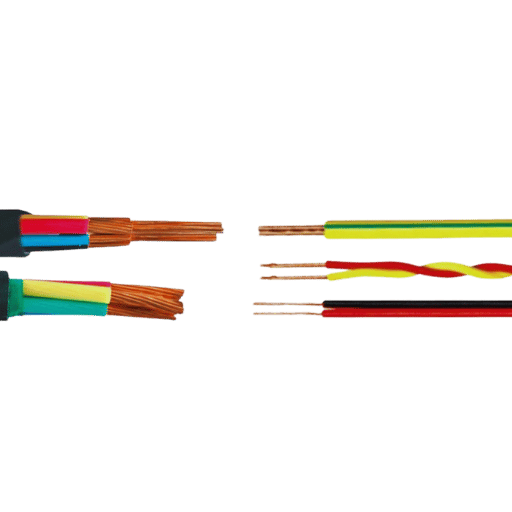
A wire is a single cylindrical strand of conductive material, typically composed of metals such as copper and aluminum. Its primary function is to transmit electric current and is often utilized in electrical systems for power and information distribution. For safety purposes, wires are usually insulated, although there are specific instances where unshielded wires are used.
Wire is a Single Conductor: Explanation
A wire is categorized as a single conductor because it is a single piece of conductive material that permits the flow of electric current. This ease of design makes it efficient for transmitting electrical current directly from the source to the destination. The single-conductor design reduces complexity and optimizes energy transfer, in addition to being trustworthy, in numerous applications.
Difference Between Wire and Cable: Key Points
| Parameter | Wire | Cable |
|---|---|---|
|
Definition |
Single conductor |
Multiple conductors bundled together |
|
Structure |
Bare or insulated |
Insulated with outer sheath |
|
Material |
Copper or aluminum |
Multiple materials, often copper-based |
|
Flexibility |
More flexible |
Less flexible due to added layers |
|
Durability |
Less durable |
More durable with protective layers |
|
Applications |
Short connections, simple circuits |
Long distances, complex systems |
|
Cost |
Generally cheaper |
More expensive due to complexity |
|
Usage |
Home wiring, small devices |
Networking, power distribution |
|
Protection |
Minimal insulation |
Shielding and outer jacket for safety |
|
Signal Transmission |
Limited |
Enhanced for power and data |
Types of Electrical Wires: Overview
| Type of Wire | Key Features | Applications | Material | Voltage Rating | Special Notes |
|---|---|---|---|---|---|
|
THHN/THWN |
Heat-resistant, nylon-coated |
General purpose, conduit use |
Copper/Aluminum |
Up to 600V |
Rated for dry and wet locations |
|
TFFN/TFN |
Thin, flexible, heat-resistant |
Fixture wiring |
Copper |
Up to 600V |
Suitable for dry locations |
|
XHHW-2 |
Moisture-resistant, high heat tolerance |
Underground, raceways |
Copper/Aluminum |
Up to 1000V |
Low-leakage circuits |
|
USE-2/RHH/RHW-2 |
Direct burial, wet/dry use |
Underground, service entrance |
Copper/Aluminum |
Up to 600V |
Suitable for wet locations |
|
Bare Wire |
No insulation, flexible |
Grounding, overhead systems |
Copper |
N/A |
High conductivity |
|
Tracer Wire |
Insulated, color-coded |
Underground utility detection |
Copper |
Up to 600V |
Moisture and abrasion-resistant |
|
MTW/TEW |
Flexible, oil-resistant |
Machine tools, appliances |
Copper |
Up to 600V |
Operates in high temperatures |
|
Photovoltaic Wire |
UV and moisture-resistant |
Solar panel connections |
Copper/Aluminum |
Up to 1000V |
Outdoor rooftop use |
|
TW |
Basic insulation, wet/dry use |
Conduit, branch circuits |
Copper |
Up to 600V |
Limited to 75°C |
What is a Cable?
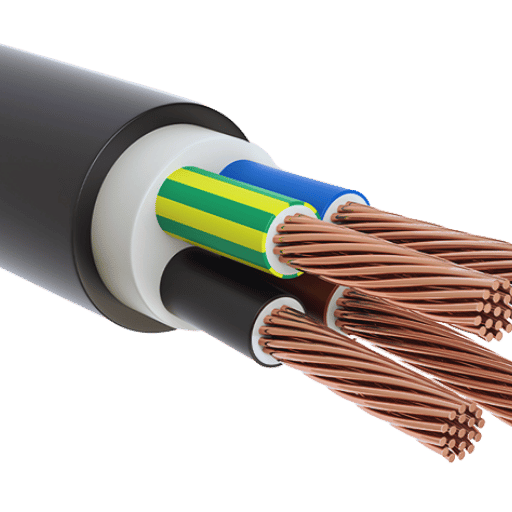
Cable is a Group of Wires: Detailed Insight
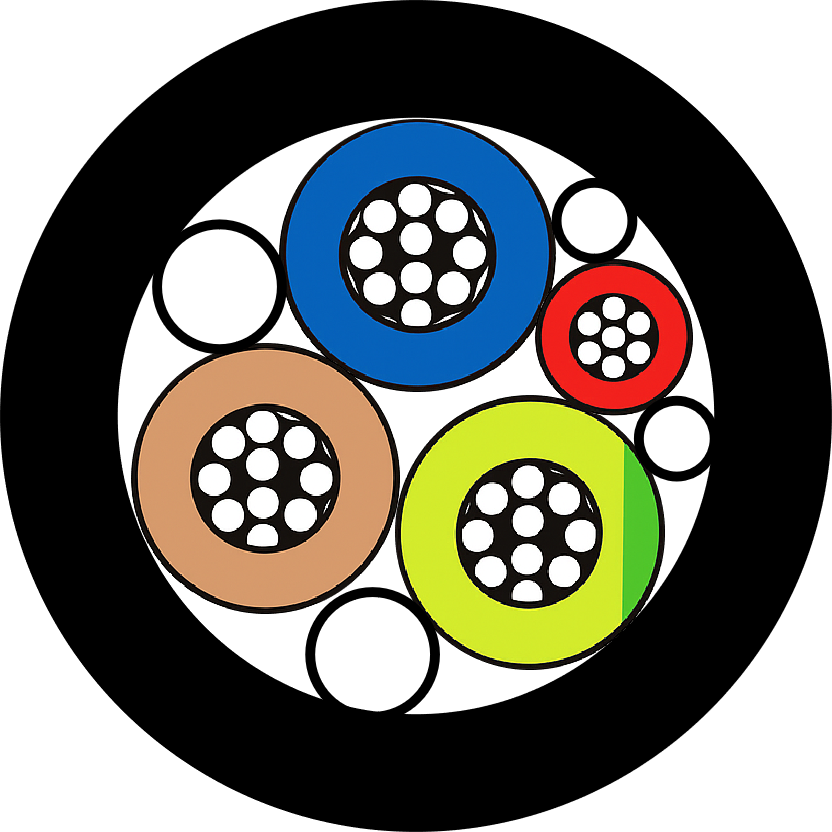
Cables are composites of different individually insulated wires bundled together to convey power or signals. Each wire is individually insulated, providing both physical and electrical protection. This aids in operational dependability, safety, reducing energy loss, and overall performance enhancement. Due to their effective performance in long-distance electricity and data transmission, cables are commonly used for power distribution, electronic systems, telecommunications, and other applications.
Types of Electrical Cables and Their Uses
| Cable Type | Key Features | Primary Uses |
|---|---|---|
|
NM (Non-Metallic) |
Flexible, plastic sheathing |
Indoor residential wiring |
|
Armored (BX) |
Metal sheath for protection |
Exposed locations, basements |
|
Metal-Clad (MC) |
Flexible metal conduit |
Industrial, commercial settings |
|
Underground Feeder (UF) |
Water-resistant jacket |
Underground wiring |
|
Service Entrance (SE) |
UV-resistant, tough jacket |
Outdoor service connections |
|
Coaxial |
Central conductor, metallic shield |
TV, internet connections |
|
Twisted Pair |
Twisted wires to reduce interference |
Networking, telephone lines |
|
Fiber Optic |
Glass/plastic transmits data as light |
High-speed internet, telecommunications |
|
HDMI |
Transmits audio and video |
TVs, gaming systems, home theaters |
|
Category 5e (Ethernet) |
Twisted pairs minimize interference |
Internet, LAN connections |
|
THHN/THWN |
Thermoplastic insulation |
General wiring, industrial use |
|
XHHW |
Cross-linked polyethylene insulation |
Industrial, outdoor applications |
|
Rubber Cables |
Extra flexible, rubber sheath |
Mobile industrial equipment |
|
Halogen-Free |
Low smoke, no halogen gas emission |
Public places, emergency circuits |
|
Fire Resistant |
Operates during a fire |
Emergency systems, alarms |
|
Solar Cables |
UV-resistant, durable |
Photovoltaic panel connections |
|
Control Cables |
Flexible, for signal transmission |
Machinery, control systems |
|
Instrumentation |
Shielded for signal transmission |
Industrial data transmission |
|
Power Cables |
High voltage capacity |
Industrial, public installations |
Cables Used in Electrical Installations: Common Types
| Cable Type | Key Features | Applications | Special Notes |
|---|---|---|---|
|
Non-metallic (NM) |
Flexible, insulated, with ground wire |
Residential wiring |
Indoor use only |
|
Armored (BX) |
Metal sheath for protection |
Exposed locations, basements |
Resistant to physical damage |
|
Metal-Clad (MC) |
Flexible metal conduit |
Commercial, industrial |
Easier to install than BX |
|
Underground Feeder (UF) |
Water-resistant jacket |
Underground, damp areas |
Suitable for outdoor use |
|
Service Entrance (SE) |
UV-resistant, tough outer jacket |
Utility to build a connection |
Outdoor use |
|
Low Voltage |
Thermoplastic/thermoset coatings |
Domestic, public places |
Up to 1,000V |
|
Power Cables |
Energy transmission |
Industrial, public places |
For variable frequency drives |
|
Armoured Cables |
Steel/aluminum reinforcement |
Risky environments, rodent-prone areas |
Fire and explosion-resistant |
|
Rubber Cables |
Extra flexible |
Mobile services, welding |
High current transmission |
|
Halogen-Free |
Low smoke, no corrosive gas |
Public places, emergency circuits |
Fire safety-focused |
|
Fire Resistant |
Operates during fire |
Emergency equipment |
Prolonged fire conditions |
|
Control Cables |
Flexible, for signal transmission |
Appliances, motors, control systems |
Electromagnetic interference resistant |
|
Instrumentation |
Shielded for signal transmission |
Industrial installations |
High electromagnetic interference areas |
|
Solar Cables |
UV and temperature-resistant |
Photovoltaic panels |
Outdoor installation |
|
Special Cables |
For unique installations |
Cranes, aquariums, submerged pumps |
Tailored for specific needs |
|
Aluminium Cables |
Lightweight, cost-effective |
Fixed installations |
Indoor, outdoor, underground |
Difference Between Wire and Cable: Key Considerations

Understanding the Difference: Wire vs Cable
| Parameter | Wire | Cable |
|---|---|---|
|
Definition |
Single conductor |
Multiple conductors bundled together |
|
Structure |
Bare or insulated |
Insulated, shielded, and encased in a jacket |
|
Flexibility |
More flexible |
Less flexible but more durable |
|
Durability |
Prone to wear and tear |
Robust and long-lasting |
|
Applications |
Short connections, simple circuits |
Long distances, complex systems |
|
Cost |
Generally cheaper |
More expensive |
|
Material |
Copper, aluminum |
Multiple wires of copper or aluminum |
|
Insulation |
Thin or absent |
Thick, multi-layered |
|
Usage |
Home wiring, small devices |
Networking, power distribution, AV systems |
|
Gauge |
Defined by AWG |
Includes multiple gauges |
Components of a Cable: An In-depth Look
Cables are composed of multiple parts, which include wires and conductors used to transmit electrical signals, an insulating outer layer to encase the wire and prevent energy loss, and finally, an external environmental casing to defend the inner parts from physical damage.
Applications: Wire vs Cable in Electrical Installations
- Residential Wiring: Wires are typically used for lighting and outlet circuits in houses; non-metallic (NM) sheathed cable is used for easier mounting and added protection.
- Industrial Environments: Cables have an edge in protection and other forms of insulation, making them suitable for high-powered tools and inclement weather conditions. Thus, they are usually used in industrial work.
- Telecommunication Systems: For transmitting data signals and supporting telecommunication networks, specific, specialized cables are crucial, such as coaxial and fiber-optic cables.
- Automotive Systems: In automotive wiring harnesses, wires are used to provide interconnectivity between various circuits. Bundled cables improve organization while also offering resistance to heat and vibration.
- Power Distribution: Power cables are designed to carry electricity at very high voltages over long distances, whereas wires are suitable for local distribution and interconnections.
Common Types of Electrical Wires and Their Uses
Solid Wire vs Stranded Wire: Which to Use?
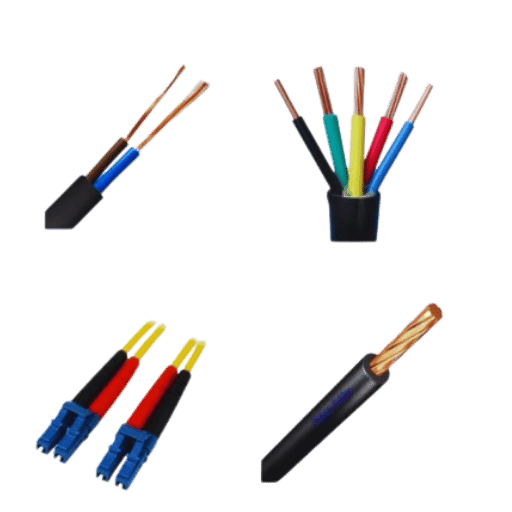
When selecting between solid and stranded wire, the proposed application and working conditions must be taken into consideration first. Solid wire is well-suited for stationary installations because it is less expensive, durable, and capable of carrying a higher amount of current. It is widely used in the wiring of buildings and electrical panels. Stranded wire is more suitable in cases where flexibility is required, such as within vehicles or machinery, or in highly mobile and vibrational areas. Its flexible structure also prevents breakage in dynamic environments, rendering it more reliable for such applications.
Insulated Wires: Why Insulation Matters
The insulation of electrical wires prioritizes both protection and functionality. It ensures that electric wires do not come into contact with external surfaces or other conductors, which reduces the chances of short circuits, shocks, and fire. Insulation also ensures the wire’s performance by protecting it against environmental factors like moisture, heat, and chemicals. The usability and conformance to safety regulations make high durability insulation qualities explicitly chosen for the application.
Copper Wire and Its Electrical Properties
Copper wire is widely used in electrical systems due to its unparalleled conductivity, which allows for the transmission of electrical currents with minimal energy loss. It has relatively low electrical resistance compared to other metals, making it suitable for power distribution and electronic systems. In addition, copper offers high thermal stability, allowing it to be effective over a wide range of temperatures. Furthermore, its mechanical properties, including flexibility and durability, make copper reliable and long-lasting in various applications. Due to these properties, copper wire is highly favored in both residential and industrial electrical installations.
Popular Types of Electrical Cables
Coaxial Cable: Uses and Advantages
Coaxial cable has widespread use for transmitting high-frequency signals due to its low attenuation properties. Its most common uses are in the distribution of television signals, internet connections, and telecommunication services. The construction of the cable, which features a center conductor, insulating layer, metallic shielding, and outer jacket, achieves strong signal integrity while providing adequate protection against electromagnetic interference (EMI). The ability of coaxial cables to transmit data over long distances with minimal loss makes these cables reliable, durable, and indispensable in both residential and commercial environments.
Twisted Pair Cable: What Makes it Special?
Twisted pair wires are used in circuits or telephone networks alongside other types of cabling as they minimize interference while maintaining signal quality. It is composed of pairs of stranded copper wires that are insulated and twisted about each other. It may be shielded or unshielded. The idea of transmitting wirelessly by radiating electric signals into the air is technically known as telecommunication RNA. In network configuration, it is useful for connecting two or multiple devices through a router or switches. Cables are used widely in all applications, ranging from Ethernet networks to telephones, which makes the system affordable and efficient.
Fiber Optic Cable: The Future of Data Transmission
Fiber optic cables are transforming data communication by using light to transmit information at unparalleled speeds across vast distances with remarkably low signal attenuation. These cables, made of slender glass or plastic filaments, possess a much higher bandwidth potential than conventional copper cables, making them suitable for contemporary fast-paced networks. Additionally, fiber optic cables are not subject to electromagnetic interference (EMI), enabling greater security as they are more challenging to access undetected. These cables are fiber optic and use essential technology for the internet, governance, telecommunications centers, and infrastructure.
Frequently Asked Questions (FAQs)
Q: What is the difference between wire and cable?
A: Cable and wire are often thought of as the same thing, but they have varying definitions. A single wire is known as a conductor, whereas several wires bundled together form a cable. A cable is composed of wires arranged in such a way as to allow them to work in cooperation with one another.
Q: What different types of wire are there for electrical work?
A: Various kinds of wire are used in electrical work, including solid or single-wound wire, stranded or multiple-wound wire, as well as braided wire. A solid wire is a thick, single piece of copper or tinned wire. Stranded cables are made from a bundle of solid cables that have been twisted to enhance flexibility and strength. Specialty braided wires offer better flexibility and excel in EMI shielding.
Q: What type of cable is preferred for household electrical installations?
A: NM cables, or non-metallic sheathed cables, are the most common type of cables used for household electrical installations. They contain several current-carrying units known as insulated conductors, which have a hot (live) wire, a neutral wire, and a grounding wire. This type of cabling is meant to be both easy and safe to install in homes.
Q: How does the diameter of the wire affect its performance?
A: Wire gauge is a measurement of the diameter of the wire, and it has a direct bearing on the electrical current that flows through it. As the gauge number decreases, the physical diameter of the wire expands, increasing its current-carrying ability. Various applications must select the correct wire gauge suitable for efficient and safe electricity transmission.
Q: What are HDMI cables, and how do they differ from other cable types?
A: HDMI (High-Definition Multimedia Interface) cables are designed for transferring high-definition videos and audio from one electronic device to another, such as a TV or computer. Other wires may involve transmitting electrical current, but HDMI cables do not. HDMI cables are designed for multimedia transfers and are composed of several conductors to facilitate data transfer, along with foil conductors that prevent interference.
Q: Can you explain the term “multi-conductor cable”?
A: A multi-conductor cable is an arrangement of several insulated conductors bundled together and placed inside one outer protective sheath. These cables are used in applications that require the simultaneous transmission of multiple signals, such as in phones, telecommunications, and even in complex electronic systems. In addition, they simplify maintenance and installation activities.
Q: What is a power cable, and where is it commonly used?
A: A power cable can be defined as a cable intended for the transmission of electrical power and consists of several insulated conductors. This type of cable is used within buildings and in factories to link electrical power sources to a variety of devices, appliances, machines, and other electrical accessories. Depending on its application, power cables need to conform to specific regulatory safety and performance standards.
Q: How does a fiber-optic cable differ from traditional electrical cables?
A: The difference lies in the method of signal transmission. While traditional electrical cables use conductors to carry electrical signals, fiber-optic cables transmit data via light signals. These cables are comprised of fine glass or plastic fibers and are extremely useful in telecommunication and internet systems because they have a greater bandwidth and faster data transmission speed.
Q: Why is it important to consider the type of cable for specific applications?
A: From a safety, efficiency, and performance perspective, choosing the correct type of cable is critical in electrical systems. Various systems have different requirements, such as voltage levels and environmental factors, which need to be considered while selecting a cable. Any selection error can cause damage, raise safety concerns, and render the system ineffective.
Q: What role does the sheath play in a cable?
A: The sheath performs the function of insulation for the conductors, shieldings, and fillers within. It provides a barrier against physical, chemical, and electrical harm, resulting in more productivity, durability, and performance of the cable. Usually, the environment in which the cable is to be used determines the materials used for the sheath.
Reference Sources
SECTION 16120-WIRE AND CABLE – Outlines the requirements for wires and cables, facilitating an understanding of their technical parameters.
Assessment of Innovation Capability in the Cable and Wire Manufacturing Industry – Offers a profound analysis of an individual industry within the cable and wire manufacturing sector, along with its diversity.