







Due to the perceived triviality of installing an audio system, the speaker wire is often overlooked. Speaker wire gauges can significantly impact the sound quality of a setup, depending on the listeners, whether it’s for a mass audience or a select group of ears. Wire gauges refer to the thickness of wires. So, what are they and why are they important? This guide will delve into a discussion about selecting speaker wire gauges, how they influence performance, and provide you with ideas to help you make an informed decision. Prepare to learn this technical tip to ensure the most transparent and loudest sound possible from your audio system.
What is Speaker Wire Gauge?
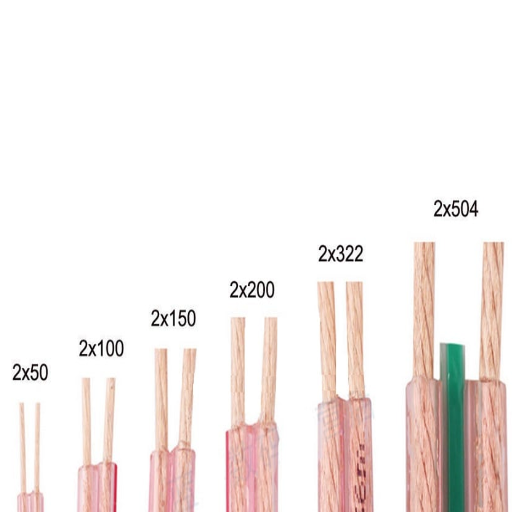
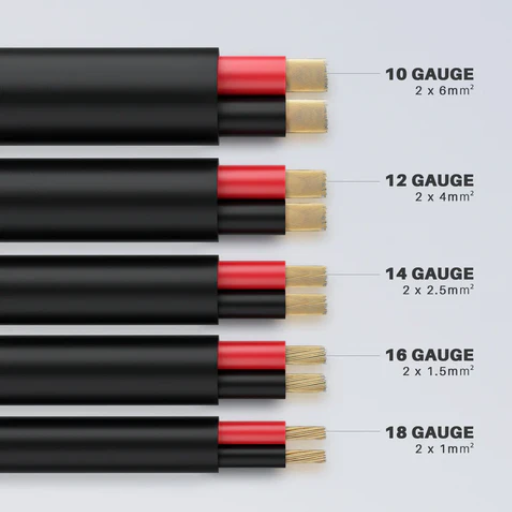
Choosing the right speaker wire gauge means selecting a cable with the appropriate thickness to connect an amplifier and speakers in your audio system. It uses the American Wire Gauge system (AWG), in which lower gauge numbers correspond to thicker wires, and vice versa. Thicker wires are recommended for longer distances and more demanding power requirements to reduce resistance and signal loss. In most home audio setups, 16-gauge wire is sufficient; however, larger systems and longer runs may benefit from 14-gauge or 12-gauge wire. Having the correct gauge will provide for good performance and high-quality sound.
Definition of Speaker Wire Gauge
Speaker wire gauge refers to the thickness of the wire, measured according to the American Wire Gauge system. Under the AWG system, thicker wires are assigned lower numbers, and thinner wires are assigned higher numbers. Wire thickness affects its ability to carry an electrical signal for long distances with minimized resistance or power loss.
For instance, 12-gauge and 14-gauge wires are thicker and can be used for high-power setups or longer cable runs, as they can handle higher currents with less resistance. This is what is recommended for an extensive home theater system or professional audio installation. On the other hand, 16-gauge wire is suitable for most standard home audio systems with short to medium cable runs.
Distance, then, plays a vital role in choosing the speaker wire gauge. For runs of up to 50 feet, 16-gauge wire is recommended. For runs of approximately 50 to 100 feet, 14-gauge wire should be used to minimize signal degradation. Very long runs, exceeding 100 feet, or high-demand scenarios typically require a 12-gauge wire choice.
Apart from this, the wire type-autumn copper or copper-clad aluminium (CCA)-makes a difference to the sound. Copper is preferred because it exhibits good conductivity, resulting in minimal energy loss. CCA, however, is a cheaper alternative to pure copper and is recommended only for applications that fall under lightweight specifications, as it has much higher resistance compared to pure copper. Choosing the correct gauge and material will initiate good audio performance and consistent signal transmission for their requirements.
Importance of Wire Gauge in Audio Systems
The wire gauge is a crucial consideration for the performance of audio systems, as it impacts the signal transmission efficiency. The wire gauge is determined according to the AWG (American Wire Gauge) standard, whereby a smaller number indicates a thicker wire. Thicker wires, such as 12 or 14 AWG, are typically recommended for longer cable runs or high-power systems due to their lower resistance and reduced signal loss along the separate conductors. Morally, thinner wires, say 16 or 18 AWG, will work fine for short runs or in low-power applications.
In a home audio system, a 16 AWG wire is suitable for cable lengths running up to 50 feet if the power demands are moderate. For runs exceeding 50 feet, it will be necessary to upgrade to 14 or 12 AWG cable to maintain sound quality and minimize energy loss. According to research and industry standards, it is also recommended that the resistance of a wire should not exceed 5% of the impedance of the speaker it is connected to, to prevent audible distortion. In other words, for an 8-ohm speaker, the total cable resistance should not exceed 0.4 ohms.
Proper gauge selection ensures that audio signals are delivered from the amplifier to the speakers with minimal signal degradation, thereby retaining clarity and fidelity. Factors the user must consider when choosing the best wire gauge for their application include the amplification power output, the connection distance, and the speaker inclination.
How Gauge Affects Sound Quality
Wire gauge is crucial to sound quality, as it controls resistance, signal transmission, and overall performance. A lower gauge will have thicker wires with greater conductivity and less resistance, making it more suitable for transmitting electrical signals over long distances. For example, in setups with speakers that are farther from the amplifier, 12-gauge wire is preferred, as its low resistance will help maintain the clarity of the audio signal. Conversely, higher-gauge cables, such as 18-gauge wires, being thinner, may cause signal loss or distortion, especially in longer cable runs or high-power systems.
That said, in a setup where the cables are 50 feet long and connected to an 8-ohm speaker, a 12-gauge wire will yield about 0.16 ohms of resistance, which is well below the recommended maximum resistance of 0.4 ohms for superior sound quality. With an 18-gauge wire, on the other hand, resistance peaks at around 0.65, which poses the possibility of markedly degrading sound fidelity.
Ultimately, wire thickness is determined by power requirements. Here, a high current from an amplifier delivering massive watts demands a thick wire to ensure that the conductor carries this current efficiently without considerable adverse impacts, such as heating and signal distortion. Hence, for shorter cable runs or slightly less demanding setups, high-gauge wires are perfectly adequate.
In short, selecting an appropriate wire gauge is a top priority for preserving the audio signal’s integrity and extracting maximum performance out of your system. Doing the calculations will undoubtedly result in a deep and enriching experience.
Choosing the Right Speaker Wire
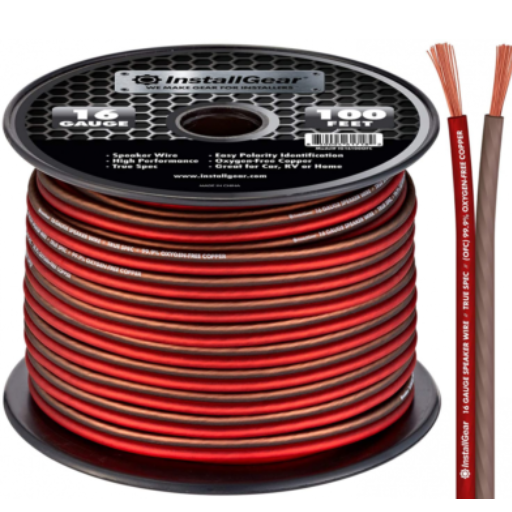
Some important considerations when selecting the right speaker wires are the following:
Wire Gauge: For longer cable runs, select lower gauge wires (thicker wires) to minimize signal loss. Additionally, use lower-gauge wires in high-power situations to prevent overheating. For short runs, thinner wire may suffice.
Cable Length: Measure the distance from the amplifier to the speakers. A longer distance dictates the use of thicker wire to maintain the established audio standards.
Material: Use oxygen-free copper (OFC) to promote better conductivity and strength.
Compatibility with the Speaker System: Wires must be appropriate for the power output and impedance of your system to prevent any performance issues.
Paying close attention to these factors guarantees the perfect performance and reliability of your audio setup.
Factors to Consider in Speaker Wire Selection
Wire gauge is crucial, as it affects resistance, which in turn impacts sound quality. A 16-gauge wire is sufficient for distances up to 25 feet between the amplifier and the speaker. It is best to use 14-gauge wire for distances between 25 and 50 feet, and 12-gauge wire for distances above 50 feet. The use of undersized wires for lengthy runs can severely degrade sound quality due to increased resistance.
Material quality: The construction of the wire greatly influences conductivity and performance. Oxygen-free copper (OFC) is considered top-notch, with high conductivity and low signal loss. Copper-clad aluminum (CCA) is a cheaper alternative that performs slightly less efficiently than OFC. Premium-grade silver wires are for die-hard audiophiles, but from a cost perspective, they cannot be recommended for regular configurations.
Impedance and Power Transmission: This allows for more efficient power transmission by matching the impedance of the wire with the power output of your audio system. High-power speaker systems require thick cables to handle the load without wire heating or signal degradation. A mismatch between the wire impedance and the system can produce distorted or weak sound.
The insulation and durability: Good insulation can shield the wire from moisture, heat, and wear caused by environmental factors that significantly contribute to performance degradation over time. Look for cables with strong jackets, such as those made from polyethylene or PVC. For concealed wiring under floors or within walls, select wires rated as CL2/CL3 or FT4 to maintain code compliance.
Shielding to prevent interference: Shielding in speaker wires must be capable of keeping electromagnetic interference (EMI) and radio frequency interference (RFI) at bay, especially in areas with numerous electronic devices. The shielding thereby prevents signal distortion, resulting in a much cleaner audio output.
Price vs. Performance: While it is tempting to opt for high-end solutions, one must also consider their price. Many wire solutions at middle-grade performance go a long way without exorbitant premiums. Examining specifications such as gauge, material, and certifications in comparison to your system can certainly help you find that middle ground.
The pursuit of these considerations will yield a setup that is optimized for minimal losses during performance. Investing in fine speaker wires holds as much passion in life as investing in fine speakers and equipment.
Recommended Gauges for Different Speaker Types
Speaker wire gauges include 12, 14, 16, and 18 AWG, each suited for different speaker types and distances.
| Gauge (AWG) | Use Case | Distance | Power Handling | Speaker Type |
|---|---|---|---|---|
| 12 | High-power | Over 50 ft | Excellent | Subwoofers |
| 14 | Mid-power | Up to 50 ft | Very Good | Floorstanding |
| 16 | Low-power | Up to 25 ft | Good | Bookshelf |
| 18 | Low-power | Under 15 ft | Moderate | Compact |
Common Mistakes in Choosing Speaker Wire Gauge
Using the Wrong Gauge for Long Distances: A common mistake is using a wire gauge that’s too thin for long distances. With longer runs, thinner wires like 18 AWG will introduce higher damping resistance, leading to significant sound quality degradation. From about 50 feet onwards, there will be noticeable power loss with an 18 AWG wire, which will affect the overall performance status, especially in high-powered systems. They should use thicker wires, such as 12-gauge or 14-gauge, for longer runs to minimize signal loss.
Overestimating the Wire’s Power Handling: Selecting wire gauge without considering a speaker’s power requirements is a sure recipe for questionable performance. High-power-rated speakers, such as those for a subwoofer, require wires with a gauge of 12 AWG, which can efficiently handle higher currents. Thin wires can’t provide adequate power, resulting in weak bass or distorted output, especially for floor-standing speakers that are particularly demanding.
Ignoring Speaker Impedance: Failing to consider speaker impedance remains another standard error. Lower impedance speakers, such as those with a resistance of 4 ohms, require more power and thicker wires to ensure signal clarity. Thin cables, when used, allow these resistances, which can cause heating, distortion, or outright damage and distress to the amplifier or speakers.
Misjudging Installation Needs: Another common mistake is failing to consider gauge selection for concealed installations, such as those inside walls. For concealed installations, one must select the correct gauge for the length along with cables rated for in-wall use (certifications such as CL2 or CL3). Failing to do so risks safety hazards or violating building codes.
Assuming All Wires Are Equal: Many people believe that any speaker wire with the same gauge will perform equally well. Yet, both the manufacturing processes and materials used are factors that affect wire performance; for example, the purity of copper or the strand count. For optimal audio performance, consider purchasing speaker wire made of high-quality oxygen-free copper (OFC), which is superior to bargain-basement alternatives.
Avoiding errors such as these enables one to make a decision that further optimizes audio processing and extends the lifespan of the speaker system. The choice of speaker wire gauge is crucial in providing a clean, strong, and distortion-free listening experience.
Understanding Different Gauges of Speaker Wire
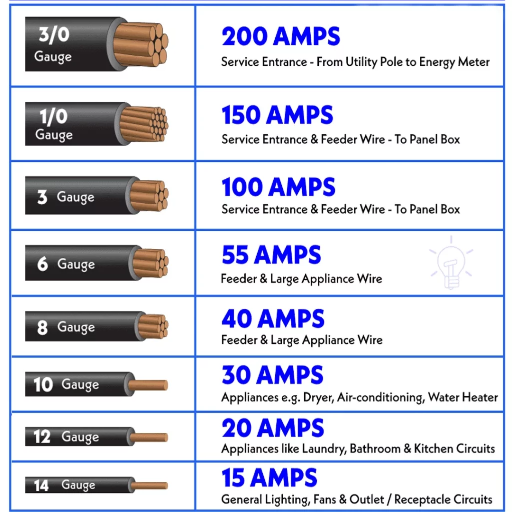
Speaker wire gauges denote the thickness of the wire and are measured according to the American Wire Gauge system. The lower the gauge number, the thicker the wire; the higher the number, the thinner the wire. The thicker wires (12- or 14-gauge) are best for longer distances or applications requiring higher power, since they reduce resistance and thus maintain sound quality. Lighter-gauge cables (16- or 18-gauge) are acceptable for short distances and low-to-moderate power systems. Generally, for most home audio installations, 16-gauge wire is fine for runs up to 50 feet. Always verify that the wire is compatible with your equipment, and consider the length of the runs to ensure optimal signal delivery.
Thicker vs. Thinner Wires: Pros and Cons
Speaker wire gauges range from 12-gauge, 14-gauge, 16-gauge, 18-gauge, to 20-gauge.
| Parameter | Thicker Wires | Thinner Wires |
|---|---|---|
| Gauge | 12-14 | 16-20 |
| Distance | Longer | Shorter |
| Power | Higher | Moderate |
| Resistance | Lower | Higher |
| Flexibility | Less | More |
| Cost | Higher | Lower |
| Use Case | Pro setups | Home setups |
Standard Wire Gauges Explained
Speaker wire gauges indicate wire thickness, with lower numbers indicating thicker wire gauges. For example, 12-gauge wire is much denser than 20-gauge wire. The choice of gauge depends mainly on the length of the wire and the power requirements of the audio setup.
12-Gauge: Ideal for professional setups and long cable runs exceeding 50 feet. With significantly lower resistance, a 12-gauge wire can handle high power and deliver high-fidelity sound for large speakers or subwoofers. It is less flexible and more expensive.
14-Gauge: It is a more versatile option for medium-distance applications, supporting lengths up to 50 feet for home theater or hi-fi systems. It strikes an outstanding balance between performance and price, while also handling sufficient power.
16-Gauge: Most suitable for standard home audio setups with wire lengths of 25 feet or less. It offers adequate power transmission for small to medium-sized speakers while being very affordable in terms of price and flexibility.
18- and 20-Gauge: These thinner wires are best suited for short runs of 10-15 feet or less and are typically used for smaller speakers in tight spaces. Their resistivity and power limits make them inadequate for high-end audio systems.
Knowing these wire gauges will help you select the right type, ensuring no signal loss or degradation occurs and granting you the best possible audio performance for your setup.
How Gauge Impacts Cable Length
The speaker wire gauge primarily determines the distance at which an audio signal can be transmitted without signal loss or distortion. Thicker wires (with lower gauge numbers such as 12 or 14) are more suitable for longer cable runs and higher-power setups because they possess a greater ability to conduct current with less resistance. Conversely, thinner wires (with higher gauge numbers, such as 18 or 20) offer greater resistance, thereby restricting the signal and proving better suited for short distances or low-power systems.
In other words, a 12-gauge wire is quite suitable for cable runs of up to 80 feet with negligible impedance for speakers set at 8 ohms; conversely, a thinner 16-gauge wire may exhibit a slight impedance loss if the length exceeds 50 feet under the same conditions. An 18-gauge wire would typically need to cover distances less than 25 feet to maintain the highest audio fidelity. Keep in mind the impedance of the speaker itself; a speaker with too-low impedance (4 or 6 ohms) can draw a heavy current. Hence such speakers have to have either thinner wire or shorter running lengths to ensure these losses do not cripple power transfer.
Considering both length and gauge together during planning would be advisable to make informed decisions about your audio setup. A wire that is too thin for its given length can degrade sound quality, reduce volume, or even overheat. Selecting the correct wire gauge for the length and specifications of your system is a crucial step in achieving optimal performance. Charts and established guidelines from industry authorities can help clarify such decisions.
Gauge of Speaker Wire Explained
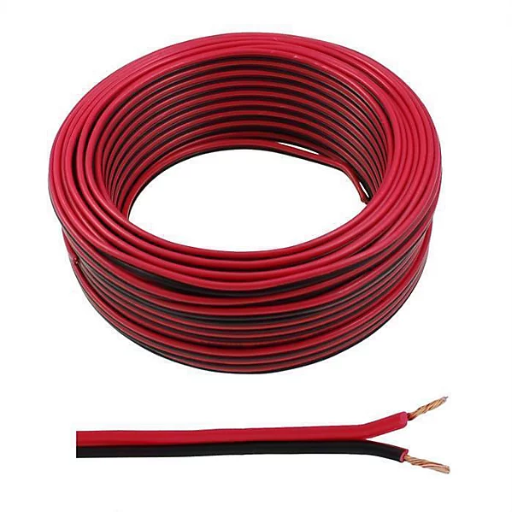
The thickness of a speaker wire is measured according to the American Wire Gauge system. The lower the number, the thicker the wire; the higher the number, the thinner the wire. Thick cables (such as 12 or 14 AWG) are suitable for long distances or setups with very high power requirements, where high resistance could impede signal transfer. For long-distance runs in a standard home audio system, thinner wire (16 or 18 AWG) should suffice. The choice of speaker wire gauges will be determined by the distance from your amplifier to your speakers and the power required by your audio system. Refer to a wire gauge chart for proper selection.
Understanding Wire Gauge
Wire gauge selection depends on numerous variables, including wire run length, current flow, and the power required by the system. The voltage drop is crucial in selecting the correct wire gauge, as the longer the run, the greater the resistance, which causes a decrease in signal quality. To illustrate, in home audio applications, it is recommended that 12- or 14-AWG wires be used for runs exceeding 50 ft. This will minimize resistance and preserve audio clarity. Shorter runs, typically 25 feet or less, can normally use 16- or 18-gauge wires with little effect.
Lower gauge, or thicker wires, provide less resistance and enable the wire to maintain higher current flow without the heat generated, concerning the working of the power systems having high amperage (professional audio, and automotive applications) for example, depending on the type of insulation and other environmental factors, a gauge 12 wire shall be capable of safely carrying a maximum of 20 amps.
Likewise, oxygen-free copper (OFC) and copper-clad aluminum (CCA) are two of the most commonly used wire materials in audio applications. The OFC option is more conductive and more durable, and is best suited for high-performance systems, while its competitor will offer a price cut for standard installations. Selecting the correct wire gauge and material will enable your audio system to perform optimally and last longer.
How Gauge Affects Audio Quality
The wire gauge has a significant impact on the sound quality of an audio system. The lower wire gauge number indicates a thicker wire, capable of carrying signals over long distances with low resistance. For example, a 12-gauge wire is thicker than a 16-gauge wire and hence preferable for high-power systems or longer cable runs.
Signal degradation due to resistance becomes more pronounced with longer and thinner cables, particularly on extended runs and in high-power setups. The result is less understandable voices, lost bass responses, and, obviously, a poorer overall performance. 12- or 14-gauge wires are, therefore, recommended for speaker systems with a power rating exceeding 75 watts, particularly when the cable length exceeds 50 feet. Meanwhile, a 16-gauge wire would be suitable for shorter installations or lower power requirements.
Thicker cables, such as 12-gauge, can also accommodate higher impedance levels, which ensures a stronger, more consistent signal. For lower impedance speakers (such as 4 ohms), thicker cables are essential to avoid an unwanted voltage drop. To ensure optimal audio clarity and efficiency, selecting the correct wire gauge based on the amplifier’s power, the speaker’s impedance, and the cable’s distance is crucial. By properly coordinating these components, a balanced audio performance can be tailored to the specific needs of your system.
Best Gauge for Different Speaker Setups
When selecting one of the best wires for different speaker setups, there are three main points of consideration: the power of the amplifier, the impedance of the speakers, and the distance between the amplifier and the speakers. For most home audio setups, a 16-gauge wire works well for short runs and standard 8-ohm speakers. However, if I need to run a long cable or use lower impedance speakers, such as 4 ohms, I should prefer 14-gauge wire, and sometimes 12-gauge wire, to minimize resistance and maintain the clear quality of sound. To put it simply, choosing the correct gauge ensures the best efficiency and an incident-free audio experience tailored to the setup.
Types of Speaker Cables and Connectors
Different audio setups require different types of speaker cables. Regular copper cables typically serve the home-based audio needs, whereas oxygen-free copper cables offer improved conductivity and greater durability. When you go specialized, you will come across silver-plated cables or flat cables, which are usually intended for hidden installations.
On the other hand, connectors adhere to their characteristics, ensuring secure and stable connections. Banana plugs are widely used due to their ease of use and acceptance, while spade connectors offer greater security, making them suitable for high-power setups. Bare wire connections can be the most straightforward method, yet their durability is often questioned over a long period. For professional and portable applications, Speakon connectors feature locking mechanisms that guard against unintentional disconnections. A well-chosen mixture of cables and connectors will secure excellent results and the long life of your audio system.
Different Speaker Cable Connectors
Banana Plug: Considered for its simplicity and ease of use, Banana plugs offer a consistent connection that avoids frayed wires, making them an excellent choice for home pan-works. However, there is a possibility that the plugs may come loose if they are not firmly attached to the terminals; they may also be unsuitable as power connectors in systems that require high power.
Spade Connectors: Spade connectors provide excellent heavy-duty connections for power systems. They are less prone to accidental disconnection. On the other hand, the installation may require extra effort, as both crimping and soldering must be done correctly.
Bare Wire: Bare wire connections are the most straightforward type of connection to make and are used predominantly for quick fixes. They do not require any additional components, making them a cost-effective option. Nonetheless, corrosion can develop, and they tend to loosen over time, thereby diminishing their reliability.
Speakon Connectors: Sealing connectors have become the professional standard for audio setups, offering locking mechanisms and the durability that provides consistency in performance and protection from accidental disconnections. This makes them ideal for live and portable systems. They can be bulky and might require proprietary cables, however.
Each type of connector is defined by its pros and cons, making it essential to understand the system’s specific needs before selecting the best option.
How to Connect Speaker Wires Properly
Properly connecting speaker wires guarantees the best audio output and safeguards the equipment. Here is a detailed description to help you accomplish it:
Understand Polarity: Speaker wires typically come in pairs, with one marked as positive (+) and the other as negative (-). Usually, the positive terminal of the receiver or amplifier is connected to the positive terminal of the speaker, and the negative terminal is connected to the negative terminal. A mistake in polarity creates phase cancellation and degradation of sound quality.
Strip Wire: Strip the wire by exposing 1/2 inch (12 mm) copper conductor using a wire stripper. Avoid nicking the wire strands because this will reduce the strength of the connection.
Choose Your Connectors: These may be bare wire, banana plugs, spade connectors, or pin connectors, depending on the setting. Banana plugs are immensely popular due to their ease of installation and secure fit. Spade connectors, on the other hand, are best for binding posts.
Tighten the Connections: Insert the stripped wire or connector into the terminal and secure the corresponding mechanism until it is tight. Ensure that the wire strands are not touching any other terminals to avoid short circuits. For spring terminals, press the clip, insert the wire, and then release it to lock in position.
Use Proper Gauge Wire: The wire gauge has a significant impact on performance. In most home installations, 16-gauge speaker wire is fine for distances up to 50 feet. For longer runs, consider 14-gauge or even 12-gauge wire to minimize resistance and thus maintain signal quality.
Test the Connection: After the speakers are securely in place, play some audio through the system to verify that all speakers are functioning correctly. If the sound is weird, double-check the connections and polarity.
Keep Wires Organized: Organize and neatly route the speaker wires using cable ties or channels. This keeps them away from power lines, which would cause interference, and also gives them a more professional finish.
Paying attention to these details will yield high-quality and consistent audio, while also keeping your setup safe and secure.
Reference Sources
Frequently Asked Questions (FAQs)
What is the ideal speaker wire gauge for my sound system?
The ideal speaker wire gauge for your sound system depends on the length of the cable run and the impedance of your speakers. For most home applications, 16 or 18-gauge wire is sufficient for runs up to 50 feet. For longer distances, consider using thicker speaker wire, such as 14 or even 12 AWG, to minimize signal loss.
How does speaker wire gauge affect sound quality?
The gauge of the speaker wire can significantly affect sound quality. Thicker wires, such as 14 or 12 AWG, provide lower resistance and can carry more current, which is crucial for delivering precise and powerful sound, especially in high-performance stereo systems. Using a wire that is too thin can result in signal degradation and reduced audio performance.
What is the difference between stranded wire and solid wire for speaker cables?
Stranded wire is composed of multiple thin strands of copper wire twisted together, making it more flexible and easier to work with, especially when routing through tight spaces. Solid wire consists of a single, thicker piece of copper, which can provide lower resistance but is less flexible. Both types can work effectively, but stranded wire is more commonly used for speaker cables due to its flexibility.
How do I choose the right speaker wire for my amplifier?
Choosing the right speaker wire for your amplifier involves considering the impedance of your speakers and the length of the wire run. Ensure that the gauge wire connected is appropriate for the distance; generally, the longer the wire, the thicker the gauge should be. A wire connected to an 8-ohm speaker should not exceed 50 feet for 16-gauge wire, while shorter runs can utilize thinner wire.
Can the length of speaker wire affect performance?
Yes, the length of the speaker wire can affect performance. Longer runs introduce more resistance, which can lead to signal loss. For optimal performance, keep cable lengths as short as possible and use a thicker speaker cable gauge for longer distances to maintain sound quality and strength.
What are speaker cable connectors, and why are they important?
Speaker cable connectors are essential components that facilitate a secure connection between the speaker wire and the speaker or amplifier. They ensure that the cables carry sound efficiently without interference. Common types include banana plugs, spade connectors, and bare wire connections, each providing different benefits in terms of ease of use and reliability.
What happens if I use a thinner gauge wire with my expensive speakers?
Using a thinner gauge wire with expensive speakers may result in a reduction in sound quality. Thinner wires can lead to increased resistance, causing signal loss and distortion. For high-end audio systems, it is advisable to use the appropriate speaker wire gauge to ensure that the speakers’ full potential is realized.
How do I correctly connect speaker wires to binding posts?
To properly connect speaker wires to binding posts, first strip the insulation off the ends of the wires to expose the copper. Next, insert the copper wire into the binding post hole and tighten the connector to secure it in place. Ensure that the cables carry sound correctly by connecting the positive and negative terminals accurately to avoid phase issues.
What is the maximum length that speaker wire can handle based on gauge?
The maximum length that speaker wire can handle based on gauge varies. For example, 16 AWG can typically handle runs of up to 50 feet for 8-ohm speakers, while 14 AWG can manage longer distances, up to about 100 feet. It’s essential to select a gauge that matches both the distance and the impedance of your speakers to achieve optimal sound quality.